





Home — Medical Facility Transportation — Stretcher vs. Gurney: What’s the Difference and Which Does Your Loved One Need?
Stretcher vs. Gurney: What's the Difference and Which Does Your Loved One Need?
Medical Facility Transportation · 6 min read
If you’ve spent any time in a hospital hallway lately, you’ve probably heard both terms in the same conversation. A nurse mentions a “stretcher,” the discharge planner talks about a “gurney,” and the transport company uses either — sometimes in the same sentence. When you’re trying to figure out what to book for your loved one, the terminology is genuinely confusing.
Here’s the straight answer, plus what a stretcher/gurney van is equipped to do, how to know if it’s the right service, and how to book one in South Florida.
The Actual Difference Between a Stretcher and a Gurney
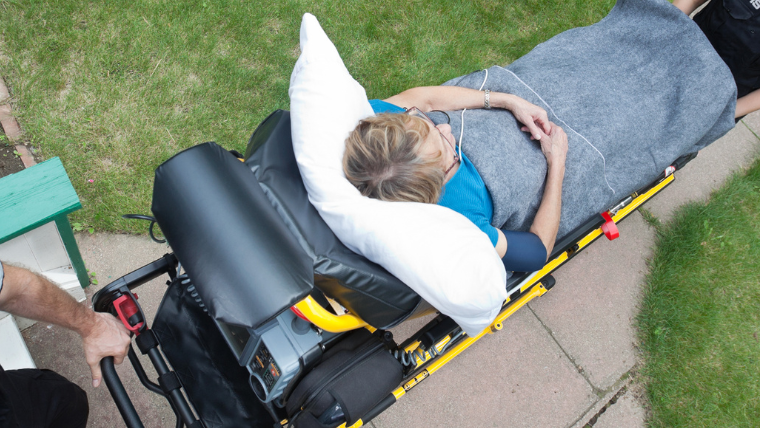
In modern non-emergency medical transportation, “stretcher” and “gurney” refer to essentially the same piece of equipment: a wheeled medical cot with an adjustable head, side rails, and safety straps, designed to move a patient in a fully reclined position. If someone in a healthcare setting uses one term and someone else uses the other, they’re almost always talking about the same thing.
The terms come from different places historically. A stretcher was originally a simpler, portable device used by first responders, military medics, and rescue teams to carry an injured person out of a scene. A gurney was the wheeled hospital cart used to move patients between rooms and operating suites. Over the decades, the wheeled design became the standard for both settings, which is why the two words now describe overlapping equipment.
Modern usage still varies by setting — EMS crews tend to say “stretcher,” hospital staff often say “gurney,” and NEMT providers use both. When someone says “we need stretcher transport” or “we need a gurney van,” they’re describing the same service: a reclined, safely restrained ride in a purpose-built vehicle. The more useful question isn’t which word is correct — it’s whether your loved one needs to travel lying down, and what a properly equipped vehicle should provide.
What a Stretcher/Gurney Van Is Equipped to Do
A stretcher/gurney van isn’t a passenger van with a cot rolled inside. It’s a purpose-built vehicle staffed by trained professionals, with equipment configured specifically for reclined patient transport. Here’s what a properly equipped Private-Pay NEMT provider brings to the ride.
1. A floor-mounted, adjustable medical cotThe cot is secured directly to the vehicle frame with a locking system rated for the patient’s weight — not placed on the floor or strapped to a bench. The head elevates, side rails deploy, and the surface is designed for pressure-point comfort.
2. A two-person trained crew — chauffeur plus attendantJano Med-Ride sends a PASS-certified licensed chauffeur paired with a trained attendant on every stretcher ride. Two people handle transfers safely, monitor the patient during the ride, and assist at both ends. This is not a rideshare model, and it’s not a taxi with medical branding.
3. Full restraint and positioning systemsChest, hip, and leg restraints keep the patient secure through turns, stops, and route changes. Head and knee elevation supports comfort for post-surgical patients, patients with spinal precautions, and anyone who needs to avoid flexing at the hip during the ride.
4. Accommodation for IV lines, oxygen, and medical equipmentMany patients travel with support equipment — oxygen, IV lines, wound drains, personal monitors. The vehicle is set up to carry it safely alongside the patient, not to work around it.
5. Bariatric-capable cots and lifts where requiredA standard cot isn’t rated for every patient. Reputable providers stock bariatric-rated cots and hydraulic lifts for patients whose weight exceeds standard limits. Ask about weight capacity when you book.
Not sure if a stretcher/gurney van is the right fit?
Get a Private-Pay NEMT quote from Jano Med-Ride in minutes — no Medicaid approval delays, no waiting lists, and a real person on the phone who can walk you through the options.
Stretcher vs. Wheelchair vs. Ambulatory: Which Service Does Your Loved One Need?
The right service depends on your loved one’s mobility level, not on which word the referring facility happened to use. Here’s how to route the decision.
Your loved one cannot sit upright — even briefly
This is when stretcher/gurney transport is the right call. Post-surgical recovery with spine or hip precautions, severe weakness, pain with sitting, or bed-bound status all point to reclined transport. If a nurse or discharge planner has said your loved one needs to travel “supine,” they mean stretcher/gurney.
Your loved one uses a wheelchair full-time
Wheelchair transport is a different service and a different vehicle setup — a lift-equipped van with wheelchair tie-downs, not a stretcher. If your loved one can transfer to and from a wheelchair and can tolerate sitting for the trip, wheelchair transportation is the right fit.
Your loved one can walk with assistance or a mobility aid
If your loved one can walk short distances, uses a cane or walker, or just needs help getting in and out of a vehicle, ambulatory transport is the right service — a standard passenger vehicle with a trained driver who provides door-to-door assistance.
You’re still figuring out where they fall
If you’re not sure, read our companion guide on understanding non-ambulatory patients and mobility levels, or call and describe the situation — we’ll help you route to the right service before you book.

How to Book Private-Pay Stretcher Transport with Jano Med-Ride
Booking a Private-Pay stretcher/gurney ride with Jano Med-Ride is a short process — most families are set up in a single call. Here’s what to expect.
1. Request a quote or call directlyStart with an online free quote or a phone call. Describe the patient’s mobility level, whether they can sit upright at all, and the pickup and dropoff addresses. If it’s a hospital discharge, let us know the facility and expected discharge window.
2. Confirm equipment, timing, and any medical accommodationsWe’ll confirm whether a standard or bariatric cot is needed, whether the patient travels with oxygen or an IV, and whether it’s one-way or round-trip. If the appointment duration is uncertain, we build in flexible return pickup.
3. Pickup, transfer, and secure loadingThe two-person crew arrives at the pickup address, handles the transfer to the cot, and secures the patient with the full restraint system. A safe transfer protects the patient, the crew, and any surgical sites or attached equipment.
4. Comfortable, monitored ride to the destinationThe attendant rides with the patient in the back, monitoring position and comfort throughout the trip. For a deeper look at the full service, see our stretcher transportation overview or read more about stretcher transport for non-ambulatory patients.
Frequently Asked Questions About Stretcher and Gurney Transport
Here are answers to common questions families ask when trying to figure out whether stretcher or gurney transport is the right fit.
What's the difference between a stretcher and a gurney?
In modern non-emergency medical transportation, essentially none. Both terms refer to the same wheeled medical cot with an adjustable head, side rails, and safety straps used to transport a patient in a reclined position. Historically, “stretcher” described simpler portable equipment while “gurney” was the wheeled hospital cart, but the equipment has since converged and the words are used interchangeably by hospitals, EMS, and transport providers.
What is a stretcher van?
A stretcher van is a purpose-built vehicle configured for reclined patient transport. It has a floor-mounted, adjustable medical cot secured to the vehicle frame, full restraint systems, and space for a trained attendant to ride alongside the patient. It is not an ambulance — there are no emergency lights or paramedics on board — and it’s not a passenger van with a cot rolled in.
Is stretcher transportation the same as gurney transportation?
Yes, in practical terms. If a discharge planner tells you “gurney transport” and a transport company advertises “stretcher transport,” they’re describing the same service: a reclined ride in a purpose-built medical van with a trained crew. The word choice usually reflects the speaker’s background, not a different service.
Do I need a stretcher van or a wheelchair van for my loved one?
The deciding factor is whether your loved one can sit upright for the length of the trip. If they can transfer to a wheelchair and tolerate sitting, wheelchair transport is the right service. If they cannot sit upright — because of a post-surgical restriction, weakness, spinal precautions, or bed-bound status — a stretcher/gurney van is what you need. If you’re not sure, describe the situation to the provider before booking.
Can a stretcher van accommodate a bariatric patient?
Yes, if the provider stocks bariatric-rated equipment. A standard cot isn’t rated for every patient, so reputable providers offer bariatric-rated cots and hydraulic lifts for safe transfers. When you book, share the patient’s approximate weight so the correct equipment is dispatched. Jano Med-Ride accommodates bariatric stretcher transport across Broward and Palm Beach Counties.
Book Safe, Private-Pay Stretcher Transport in South Florida
Whether it’s called a stretcher, a gurney, or a stretcher van, what matters is that your loved one gets to their appointment safely, comfortably, and on time. Jano Med-Ride provides Private-Pay NEMT stretcher and gurney transport across Broward and Palm Beach Counties — booked directly, no Medicaid approval delays, and always with a two-person trained crew.
Request a free quote online, browse our full service menu, or call to speak with someone who can walk you through the options.
- Available 24|7|365
- Same-Day Service
- Direct Booking
- No Medicaid